
Customers
How D&C turned impossible timelines into everyday delivery
For twenty years, D&C TV built a business on knowing how to structure localization work. Which studio for German. Which vendor for French. How to balance cost, timeline, and quality across a network of partners.
Then projects started arriving that couldn’t be structured at all.
Not because the work was impossible. Because the timelines didn’t exist. Traditional dubbing meant weeks of studio coordination, multiple recording sessions, callback fees. A content market accelerating faster than any vendor network could respond.
D&C knew what needed to happen. They just couldn’t make traditional workflows move fast enough to say yes.
The real enemy: latency and fragility
Traditional localization isn’t slow because the work is hard. It’s slow because the process is fragile.
One actor unavailable. Studio rebooked. Timeline slips. Budget burns. Callback fees stack. A project stretches across weeks when the content market measures turnaround in days.
D&C had spent 20 years building vendor relationships to manage this complexity. But no network of relationships can solve a coordination problem this deep.
They needed infrastructure that moved faster than human scheduling allowed.
A veteran who saw it coming
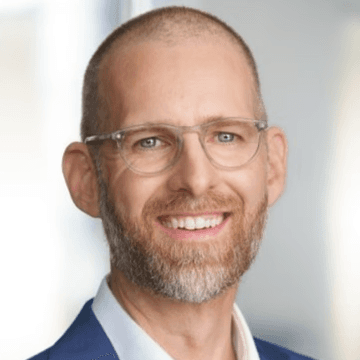
CEO Yoram Chertok started tracking AI dubbing in 2017, years before most of the industry paid attention.
He’d spent his career building media infrastructure: growing The Kitchen’s European network from 2 to 11 studios, creating systems for trafficking work between facilities, winning international awards for documentary and comedy production. He knew what made localization work at scale.
He also knew the model was breaking.
When he connected with what would become Dubformer, something clicked. Not just the technology. The philosophy.
“The one thing that made Dubformer unique in this field is that it wasn’t just aggregating codes and open sources, but actually developing its tools and listening to the media.”
— Yoram Chertok, CEO
Other AI vendors force technology onto the industry. Dubformer listened first. “This symbiotic relationship that we have allows it, enables it,” Yoram says.
Will I lose control?
This is the question every localization professional asks about AI. D&C’s answer became their philosophy: HDAI, Human-Directed AI.
“We don’t put human in the loop. We put AI in the loop.”
— Yoram Chertok, CEO
Humans direct. AI executes. The expertise stays where it always was: with the professionals who understand what makes performances work.
D&C doesn’t force teams to adapt to new technology. They meet them where they are. Some need just script creation. Some want AI for secondary voices while humans handle leads. Some need different quality tiers for different budgets.
“What we’re offering is a dialogue,” Yoram explains. “And this is what customers are used to. It’s easier for them to accept AI localization when the way of work isn’t dramatically changed.”
Will quality slip at scale?
Scaling 13x required more than technology. It required people: specifically, a new kind of professional.
D&C calls them proof listeners. The role didn’t exist before AI dubbing. D&C coined the term along with their HDAI approach.
“Proof listener is the AI equivalent to the artistic director.”
— Yoram Chertok, CEO
These aren’t button-pushers. They’re native speakers who understand the craft of dubbing and can direct AI performances the way a studio director guides voice actors. They shape timing, adjust emotion, tune delivery until performances feel right.
The role demands real expertise. The ideal candidate spent years as an artistic director in recording studios. But D&C found that intelligent people with some understanding — former translators, dubbing actors, sound engineers — learn fast. They train new proof listeners closely, then grant autonomy as skill develops. People progress from voiceover projects to audio description to full lip-sync work.
Today, D&C has more than 90 proof listeners across the globe. Germany, Austria, South Africa, Colombia, China, Japan, Korea, India, Indonesia. Native speakers in 30+ languages, all working through Dubformer Studio.
The old workflow is gone. Whiteboards tracking cabin bookings and line counts? Dead. Everything happens in the dashboard now. D&C sees every project, every proof listener’s progress, every quality checkpoint.
Will this break our contracts?
Here’s something that separates professional AI dubbing from everything else: you can’t manipulate the video.
“You’re not to touch the video.”
— Yoram Chertok, CEO
Many competitors use AI to manipulate video for perfect lip sync. In the professional market, this is a contractual violation. Almost every distribution contract specifies: if content needs localization, it happens through audio or subtitles only. Video manipulation requires different permissions — permissions that aren’t granted for localization.
This is why D&C targets the professional market, not semi-professional or social media. And it’s why the combination of Dubformer’s tools and D&C’s skilled proof listeners matters: they create the best lip sync possible without touching a single frame of video.
Is this real, or just hype?
Ask Yoram what’s changed since those early days, and the answer comes fast.
“It’s day and night what you’re talking about now.”
— Yoram Chertok, CEO
When D&C started with AI dubbing, the technology wasn’t ready for high-tier work. The voices weren’t good enough. The process needed constant adjustment.
Today, D&C feels comfortable offering lip sync dubbing for theatrical releases. The quality of voices, the quality of cloning, the dashboard itself, means everything has changed. The system takes direction better. It understands language differences. The more they work with it, the more it learns.
The numbers tell the story. D&C went from 450 minutes of localized content per month to 6,000 minutes per month. They deliver 120-150 drama episodes monthly. A 10-hour miniseries that once required weeks ships within seven business days.
The work today is almost as smooth and accurate as with human voices, but without the hustle of availabilities and studio time and callback fees. If the voice doesn’t work for the client, it doesn’t require re-recording the whole thing. You just change the voice.
D&C has delivered the first-ever full AI dubbing for feature films into French and German. Not experiments. Real productions for real broadcasters and platforms.
What changed
Same team. Same standards. Completely different ceiling.
D&C kept broadcast standards, stayed contract-compliant, and scaled output 13x (from 450 minutes per month to 6,000 minutes) without rebuilding their operating model.
They still structure traditional dubbing when projects call for it. They combine AI and human work to stay competitive. And they’ve delivered the first-ever full AI dubbing for feature films into French and German.
Not experiments. Real productions for real broadcasters and platforms.
Company
Headquarters | Israel/Greece |
|---|---|
Industry | Media Localization |
Partnership since | 2023 |
Use case | Broadcast-ready AI dubbing |
Languages | 30+ |
Impact | Scale, Speed, New Markets |
Key results
Metric | Result |
|---|---|
Volume growth | 450 → 6,000 minutes per month (13x) |
Capacity | 120-150 drama episodes (lip sync dubbing) + 2500 minutes of subtitling monthly |
Languages | 30+ |
Turnaround | 10-hour series in 5-7 business days |